
 Rick Wainschel, VP Data Science & Analytics
Why Aren’t Cars Moving Like They Used To?
If you’re looking at your lot and thinking, “This used to be easier,” you’re not alone. A lot of dealers are seeing the same pattern: inventory sits...
If you’re looking at your lot and thinking, “This used to be easier,” you’re not alone.
A lot of dealers are seeing the same pattern: inventory sits longer, shoppers ask tougher questions earlier, and pricing conversations turn into a stalemate faster than they used to. The frustrating part is that nothing looks “broken.” There’s still traffic, leads, and people shopping. They just move differently now.
Average marketed prices for new vehicles remain historically elevated. In a market like this, buyers tend to be more payment-focused and more selective. They compare more and take longer to pull the trigger. They walk sooner when something feels out of step with what they’re seeing elsewhere.
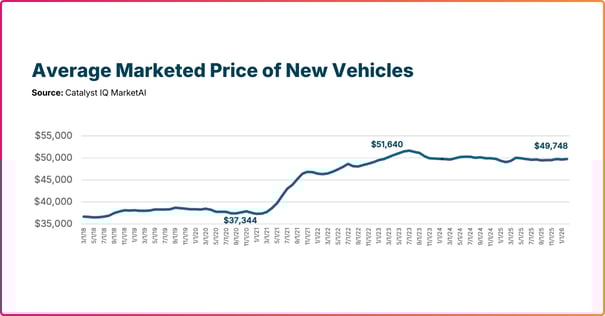
When new-vehicle prices stay high, the margin for error gets smaller. Shoppers feel it in their monthly payment, and they behave accordingly. Consumer sentiment has stayed depressed compared to pre-2020 levels, which adds more caution to big-ticket decisions.
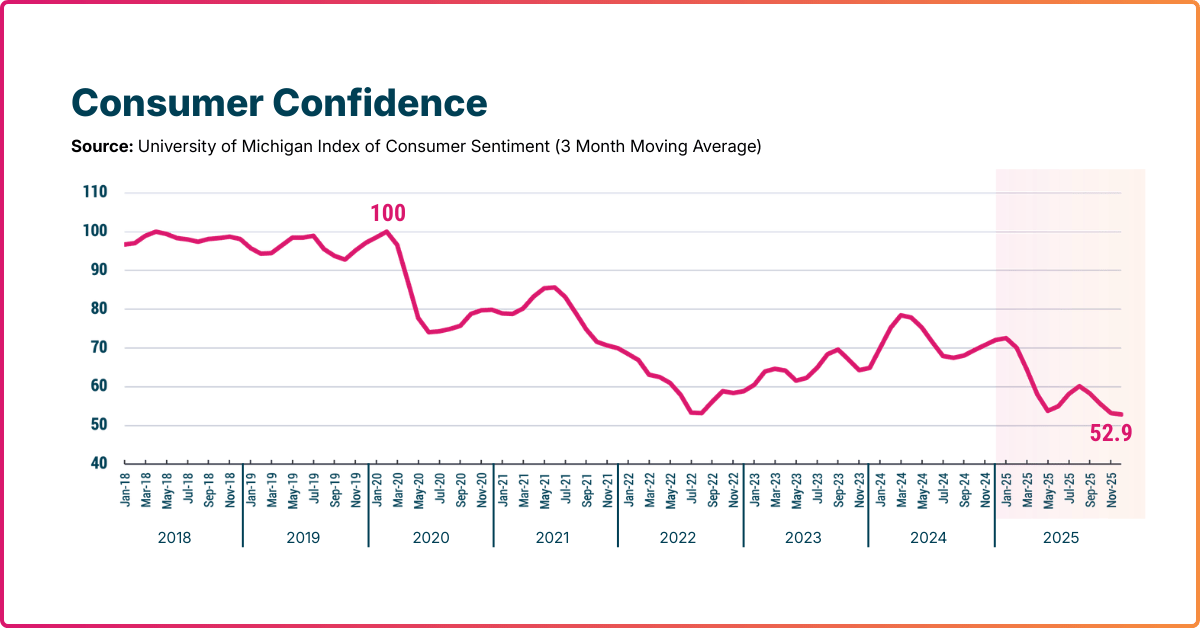
This is why being slightly above market carries a bigger penalty.
Because when a buyer sees five similar vehicles across the DMA, “a little high” reads as “not worth the hassle.”
Pricing friction rarely shows up as one big moment. It creeps in through small signals that become harder to ignore:
In a comparison-heavy market, buyers respond more to being priced in line with local alternatives than to how well the listing is written or how strong the presentation is.
When cars don’t move like they used to, pressure builds quickly. Most stores feel pulled toward one of two broad strategies.
Move 1: Hold price across the board.
This protects gross in the short term. It also increases aging exposure when shoppers are actively comparing local options.
Move 2: Discount broadly.
This can create a short-term lift in movement, but margin erosion shows up quickly. Competitive response often follows, which forces another round of adjustments.
Both moves are understandable. But when applied as a blanket approach across your entire inventory, they create unnecessary risk.
Broad, one-size-fits-all pricing strategies can amplify the very problems dealers are trying to solve—either eroding margin across the board or leaving you with aging inventory that’s even harder to move later.
The dealers who keep momentum in this environment don’t rely on broad pricing moves. They narrow their focus to what’s happening at the VIN level, where pricing pressure actually shows up.
This precision-based approach starts with understanding how each individual vehicle is positioned in the market right now. Not at the model level. Not by segment averages. VIN by VIN, against the local competitive set.
That level of visibility changes how decisions get made:
This is the difference between reacting to inventory problems after they surface and addressing them while there’s still flexibility. Small adjustments to marketed price at the VIN level are easier to manage than broader cuts applied later, especially once time and leverage are gone.
Winning right now doesn’t come from being the cheapest dealer in the market. It comes from staying accurately positioned, early enough to keep small problems from turning into aged inventory.
Catalyst IQ helps dealers do that with an ecosystem built around real-time market clarity and VIN-level precision. Powered by MarketAI® (Catalyst IQ’s proprietary intelligence engine), dealers can see how each vehicle is priced against local competitors, spot where pricing friction is building, and focus attention on the VINs most likely to stall without a targeted change.
That typically means three practical outcomes:
Hold price with confidence on vehicles that are already aligned.
Make small adjustments to marketed price early on units that are drifting out of range.
Apply support where it matters so effort and spend go to the vehicles that actually need help moving.
If you want to see what this looks like in your market, book a demo. It’s a working session focused on your inventory and your competitive set, with a clear view of where you’re aligned and where small moves can reduce friction.


About Catalyst IQ
Catalyst IQ is an integrated automotive marketing platform that helps dealerships make smarter decisions and sell more cars using real-time data, AI-powered insights, and expert human support. From digital advertising and web presence to SEO/AEO and engagement, every solution works together to drive measurable growth.

If you’re looking at your lot and thinking, “This used to be easier,” you’re not alone. A lot of dealers are seeing the same pattern: inventory sits...

Pricing trends are widening by country of origin. At retail, those gaps are starting to matter. For decades, German and Japanese automakers have...

Not long ago, dealership visibility followed a pretty predictable formula. You optimized your website for a handful of high‑intent keywords, invested...