
 Rick Wainschel, VP Data Science & Analytics
Catalyst IQ Earns FordDirect AdVantage Tier 3 Certification
Ford and Lincoln dealers gain direct access to spot opportunities sooner, make smarter advertising decisions, and sell more vehicles, faster.
New vehicle prices reached an all-time high in the second quarter of 2026, passing $52,000 for the first time. Yet demand held steady anyway. After nearly five years of rising prices, buyers have adjusted their expectations. Instead of leaving the market, they are changing what they buy and favoring affordability, fuel efficiency, and value.
That shift rewards inventory decisions made vehicle by vehicle. When you set pricing and direct ad spend on each VIN based on how it's actually moving in your market—instead of discounting a whole segment or your whole lot—you protect margin and outperform your market.
Here are the trends shaping the rest of 2026 and what you can do to stay ahead.
Consumers are still buying, and affordability now decides what they buy. Record prices used to signal that demand would soften, but that didn't happen in Q2. Buyers absorbed higher prices and moved toward lower-cost and more efficient options instead of delaying purchases.
Key takeaways:
Want to see how affordability is reshaping demand? Explore the consumer trends data.
Total demand is healthy, but it's not spread evenly. Efficient vehicles are moving while larger gas-powered models build up on lots. That gap is where you win or lose margin.
New vehicle movement rose 12.8% quarter over quarter to 37,874 units per day, and turn rate climbed to 38%.
At the same time, smaller SUVs, sedans, and hybrids gained market share, while full-size trucks and large SUVs gained inventory share but lost market share.
Used and certified vehicles held their strength, with used days-to-move dropping below 40 for the first time in almost three years.
What to focus on:
See the comparison of new, used, and certified performance.
Fuel costs are shaping what sells. Gas prices spiked after the start of the war with Iran. They have since eased about $0.58 from their recent peak but remain roughly $1.00 above pre-conflict levels.
What this means:
Makes built around efficient vehicles are pulling ahead.
Honda and Hyundai, which lean on smaller SUVs and sedans, are gaining ground.
Ford is moving its efficiency forward with models like the Escape and Maverick.
Brands weighted toward trucks and large SUVs, including Chevrolet, GMC, Jeep, and Ram, are falling behind on efficiency.
Compare hybrid and EV trends across inventory, velocity, and market share.

See MarketAI in Action | Request Demo →
The record new vehicle price isn't a temporary spike. Most of the $1,259 increase over Q1 came from lasting sources rather than short-term market swings, so prices are unlikely to fall back on their own.
Higher MSRPs added $685.
Segment mix shifts added $354.
Lighter discounting added $220, which means dealers pulled back on market adjustments compared to the prior quarter.
Unlike early 2026, aggressive discounting is no longer driving the market.
What this means for you:
Dig into how pricing and demand moved together this quarter.
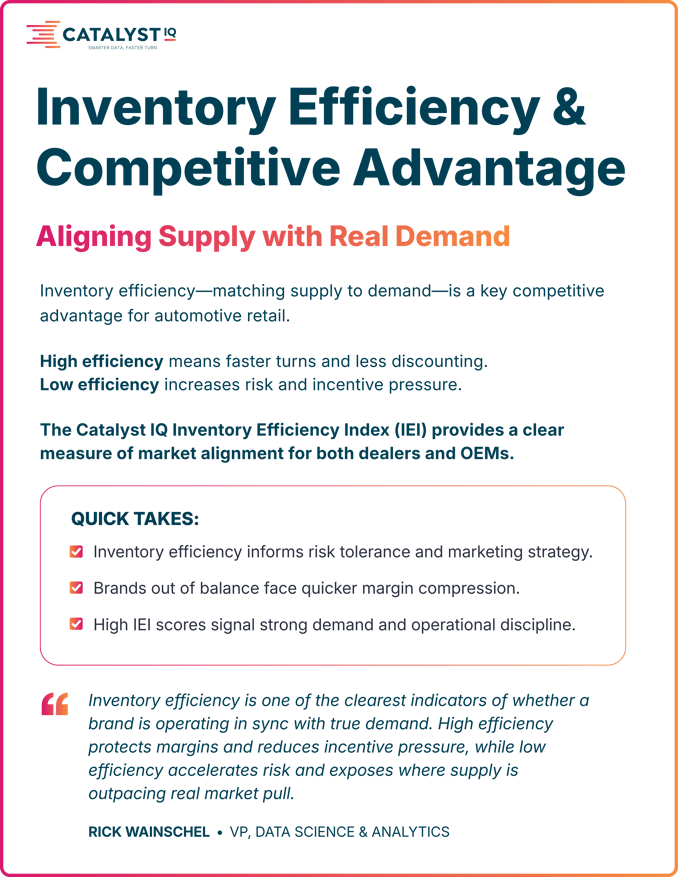
Catalyst IQ's Inventory Efficiency Index (IEI) measures how well your supply aligns with real market demand. In Q2, brands with strong efficiency turned faster and relied less on incentives. Brands carrying too much of the wrong inventory faced deeper margin pressure.
Why IEI matters:
To compete in a market where affordability decides the sale, make pricing and marketing decisions one VIN at a time rather than across a whole segment. Focus on four moves:
This overview covers the major trends. The full Q2 2026 analysis includes deeper data across makes, fuel types, segments, and regions, plus used and certified detail.
Or, if you want a personalized view of your IEI, your at‑risk inventory, and your biggest opportunities, schedule a MarketAI demo.


About Catalyst IQ
Catalyst IQ is an integrated automotive marketing platform that helps dealerships make smarter decisions and sell more cars using real-time data, AI-powered insights, and expert human support. From digital advertising and web presence to SEO/AEO and engagement, every solution works together to drive measurable growth.

Ford and Lincoln dealers gain direct access to spot opportunities sooner, make smarter advertising decisions, and sell more vehicles, faster.

When a car shopper asks AI where to buy or service a vehicle, only a few dealerships may make the list of recommendations. Find out whether...

Buyers kept buying in Q3, but new vehicle prices hit a record $52,770 and the average loan stretched to 69.5 months. See where demand is moving,...